School playground ideas don’t have to start with a blank site and a big budget. A playground that works for every child usually comes down to a handful of good decisions: clear zones, a mix of active and calmer play, and equipment that links back to what children are learning in the classroom.
We have been designing and installing playgrounds for primary schools since 1996. In this guide we share eight ideas schools come back to again and again, with examples from real projects, so you can start shaping a plan for your own grounds.
Every school site is different, so treat these as building blocks. Most of the best playgrounds combine several of them.
Before choosing any equipment, think about how the space is used at break time. Splitting the playground into zones, such as an active area, a quieter social area and a space for imaginative play, gives every child somewhere that suits them and helps reduce collisions between energetic games and calmer play. Changes in surfacing and colour help children understand where each zone begins and ends.

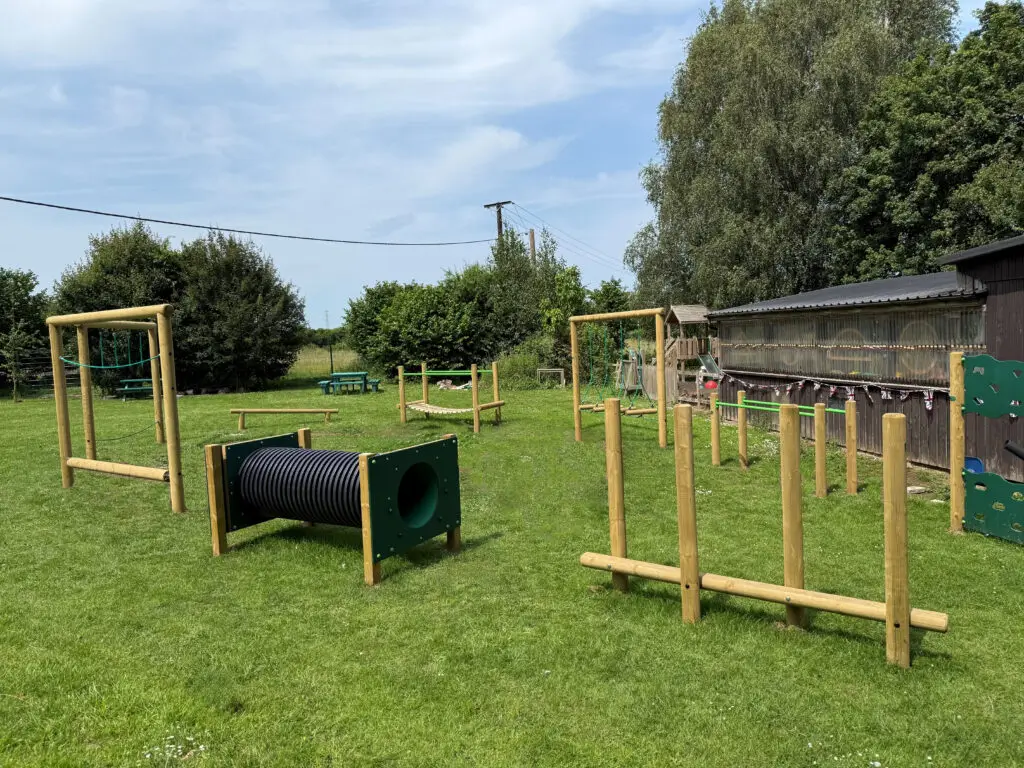
A trim trail is one of the most popular additions to any school playground. Children balance, climb, swing and step their way from one end to the other, building strength and coordination while they play. Trails can be designed to fit long, narrow spaces as well as open areas, and components can be chosen to suit different age groups. Our guide Trim Trails for Schools: Active Play for Every Break Time explains how to plan one.
For a bigger challenge, climbing equipment and play towers bring several activities together in one footprint.
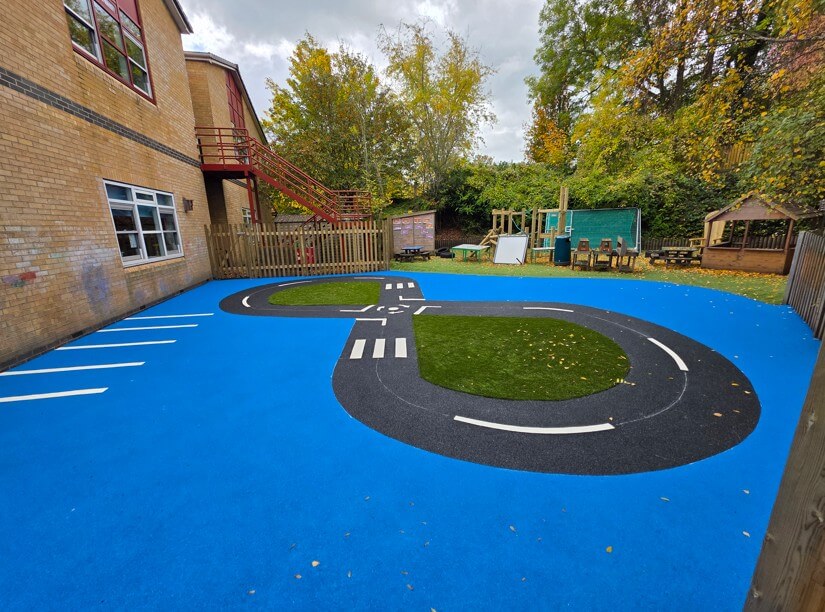
If you are working with an existing tarmac playground, playground markings are one of the most cost-effective ways to add play value. Hopscotch, number grids, maps, trackways and games courts give children something new to explore and support lessons in maths, literacy and PE. Read more in How Can Playground Markings Transform Your School Playground?
Imaginative play equipment gives children a setting for stories, role play and games they invent together. A play boat, playhouse or storytelling area supports language development, cooperation and problem solving, and makes a great starting point for literacy and history lessons.

An inclusive playground lets children of all abilities play side by side. The inclusive roundabout is set into the ground so wheelchair users can roll straight on, and the wheelchair swing gives wheelchair users the experience of swinging. Accessible routes, ground-level activity panels and sensory equipment all help too. Browse our SEN playground equipment, or read Inclusive Playground Design Ideas: A Play Space Where Every Child Belongs for more ideas.
Natural play brings variety and calm to a busy playground. Planters, growing areas, mud kitchens and sand and water play give children hands-on ways to explore science and the seasons. Charities such as Learning through Landscapes champion school grounds as places for both learning and play, and our article Natural Play For Nurseries: Why Mud Kitchens and Log Trails Support Early Development looks at the benefits for younger children.
An outdoor classroom gives teachers a sheltered space to take lessons outside in almost any weather. A timber gazebo or shelter with built-in seating can host a science lesson, a story circle or a performance. Our guide Outdoor Classrooms For Schools: Benefits, Types And Planning Guide covers the options in detail.
Not every child wants to run around at break time. Game top tables and outdoor furniture give quieter children somewhere to sit, chat and play. At the other end of the scale, outdoor gym stations give older pupils a fun way to build fitness, as we explain in Outdoor Gym Equipment For Primary Schools: A Guide For Schools.
Once you have a few ideas, a little planning helps you make the most of your budget and space.
If you are choosing between specific pieces, How To Choose School Playground Equipment: A Guide For UK Schools breaks down equipment by key stage.
These projects show how different ideas come together in real schools. You can find more in our playground designs, ideas and projects guide.
At Brunswick House Primary School, the early years area was refurbished with a roadway laid into the surface for trikes and balance bikes, zones of synthetic grass for different kinds of play, and a covered learning area with built-in seating.
At Westerton Primary Academy, we installed an Adventure Forest 2 Climber with wet pour safety surfacing, giving children a challenging new climbing area.
At Penryn Primary Academy, accessibility for all pupils was the priority, with a wheelchair accessible roundabout central to the brief.
At How Wood, the school combined PTA funds with grant funding to add an outdoor classroom alongside a new fitness trail.
Whether you want to refresh one corner of your playground or plan a complete redesign, our team can help you turn your ideas into a space your children will love. Our site visits and designs are free, so call 01209 823181 or email play@schoolscapesuk.com to talk through your ideas.
Playground markings, activity panels on existing fences and a compact trim trail all add plenty of play value without taking up much space. Zoning the area carefully also helps a small playground work harder.
Plan accessible routes to every zone, include ground-level and sensory activities, and choose equipment such as the inclusive roundabout and wheelchair swing that let children of all abilities play together.
Yes. Many schools start with one zone or with markings, then add equipment as funding allows. Planning the whole space at the start makes sure each phase fits together.


