No two children are the same. Every child learns at their own pace, finds different things easy or daunting, and has the right to play, discover and explore. Good inclusive playground design starts from that simple belief and turns it into a space where children of every ability play side by side, without boundaries. This guide shares practical inclusive playground design ideas, drawn from years of creating inclusive play spaces for schools, therapeutic and recreational settings across the country.
Even where a setting supports many children with Special Educational Needs and Disabilities (SEN/SEND), in reality every group includes a range of abilities, needs and confidence levels. Designing for that range is what makes a playground genuinely welcoming. Our SEN and SEND playground work is built around it.
The SEND Code of Practice (2015) identifies four broad areas of need: communication and interaction; cognition and learning; social, emotional and mental health; and sensory and/or physical needs. These are deeply intertwined in outdoor play, so the strongest inclusive designs offer something for each. The ideas below are grouped that way.
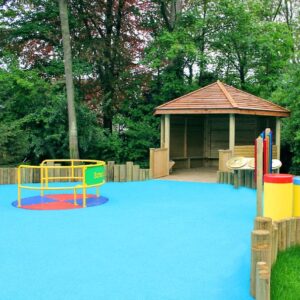
Children under pressure need somewhere to breathe. Quiet retreats let them step out of the noise, recharge and feel in control. Tunnels, play huts, dens and teepees give children a welcome escape to rest or let their imaginations run. Climbing features such as an Adventure Forest let children rise above their worries and “feel on top of things,” releasing the endorphins that lift mood and self-esteem. Building calm, low-stimulation corners into a busy playground is one of the most valuable inclusive design choices you can make.
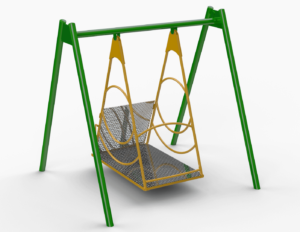
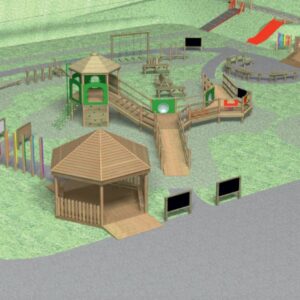
Active play should be open to everyone, including wheelchair users and children who find coordination or balance hard. An Inclusive Roundabout sits flush with the ground with open access points and a curved seat, so wheelchair users can ride aboard and feel the spinning motion that is so important for vestibular development. The large Eagle Nest Swing offers a safe, shared seat where children can swing independently or in groups. A wider range of inclusive swings and ramped towers means every child can join in. At Regency High School we built a bespoke Hexagonal Play Tower with an extensive access ramp, so every pupil could climb up and look out through the bubble windows (see the Regency case study).
Many children who struggle with the traditional curriculum thrive on sensory stimulation. A sensory garden or sound zone can become both a rich learning environment and a sanctuary. A range of outdoor musical instruments, from Rainbow Chimes and Tubano drums to a Grand Marimba and Giant Chimes, lets children explore pitch, dynamics and vibration in a space where noise is welcome. For visual stimulation, a Sand Pendulum and Dizzy Wheels let children create patterns and explore movement (and a little practical maths). For touch, a Poly Paint Station gives a permanent, wipe-clean art zone, and wheelchair-accessible and Sensory Planter Stax let every child dig, plant and harvest side by side.
Messy play is a great leveller. A robust Mud Kitchen lets children mix, pour and measure to their hearts’ content, a firm favourite for children with communication difficulties who love exploring natural materials. A Water Wall and timber River Rapids let children build and redirect their own chutes, giving ownership and open-ended discovery, and our wider sand and water play range brings STEM learning within reach of all abilities.
Belonging matters. Shared spaces help every child feel part of the group. Play huts like the Friendship Cabin, an Outdoor Teepee or a Rainbow Lean-To give children somewhere to gather. A Playtime Shop, Kitchen or Garage invites role play through wide entrances and low windows that everyone can use. Jungle Play Dens and Ships offer both low-level entry points and ladders, so children of different mobility levels can climb aboard together. And an Integrated Picnic Table with Game Top or an Access 6 Table lets children in wheelchairs sit, eat and play alongside their friends.
Outdoor learning should be open to all. Natural timber Hexagonal Gazebos with optional enclosed sides make inclusive outdoor classrooms, and adding access ramps to gazebos, staging, shelters and decking ensures every child can use the space to learn and play side by side.

At Regency High School, a specialist SEN setting, Schoolscapes designed an accessible play space built around exactly these principles, including the ramped Hexagonal Play Tower so every pupil could reach the look-out. See the full Regency High School case study for how it came together.
Whether you have a clear vision or need inspiration, our playground consultants will design an inclusive, accessible space around your setting’s specific needs. Explore our inclusive play range, our SEN and SEND playground equipment, or get in touch to start your project. For more, see our guides on making your playground more inclusive with SEN play and sensory learning.


