Commercial playground equipment isn’t one product. What works at a five-star hotel will fail at a holiday park, and a beer garden play area that feels right for a country pub would be lost at a major visitor attraction. The single biggest mistake leisure operators make when planning a playground investment is treating the project as a like-for-like purchase across all sectors.
This guide walks through what each leisure sector actually needs – and how to specify commercial playground equipment that fits the brief. It’s written for operators, marketing directors, and finance leads who are weighing up the case for outdoor play investment, and it draws on more than 25 years of UK design and installation experience through Schoolscapes and our new Leisurescapes division.
If you’ve read our existing pieces on the 4 best playground ideas for primary schools or the most popular school playground equipment for learning, this is the commercial counterpart.
Before drilling into each sector, the table below summarises the differences. It’s a useful starting point when scoping a project.
| Sector | Average Visit Length | Primary Decision Driver | Equipment Priority | Recommended Products |
|---|---|---|---|---|
| Holiday Park | 3-7 days, multiple visits/day | Family booking conversion | Variety + weather resilience | Play towers and treetops, adventure trails |
| Hotel | 30-60 mins, repeated daily | Family review scores | Compact + brand-aligned | Climbing frames, imaginative play |
| Pub | 1-3 hours, weekend peaks | Repeat custom + dwell | Quality timber, vandal-resistant | Springers, play towers |
| Visitor Attraction | 4-8 hours per visit | Dwell time + repeat visits | Scale, capacity, theming | Play boats, inclusive play |
The same piece of equipment can deliver very different commercial returns depending on the sector it’s installed in. The specification needs to match the use case.
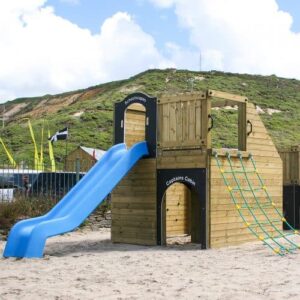
Holiday park guests typically stay between three and seven nights. They use the playground multiple times a day across the whole stay, which means variety matters far more than scale. A single large play tower that’s exhausting by day three is not a good investment; a thoughtfully zoned area with multiple types of play sustains engagement.
The following equipment categories consistently drive booking conversions at UK holiday parks:
Hotel guests typically use the play area for shorter, more frequent sessions. The bar for visual quality is high because the playground sits within an already invested property. A poorly designed play area damages the brand impression more than no play area at all.
Compact, attractive equipment with strong sightlines from family seating. Key categories include:
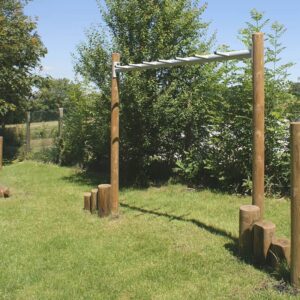
A pub play area transforms a Sunday lunch from a one-hour visit into a leisurely afternoon. Families specifically seek out pubs with good play, often travelling significant distances. The bar for entry has risen considerably in the last decade — the days of a single old slide on a patch of grass driving family custom are over. Our complete guide to pub playground equipment goes into more depth on this sector specifically.
For most pub gardens, a compact mixed-equipment offer outperforms a single large structure:
For larger countryside pubs, a small adventure trail extends the offer into a destination feature.
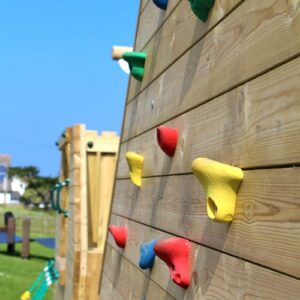
For visitor attractions, the playground is often the primary draw rather than an add-on. Guests expect a meaningful, well-thought-out play experience that justifies the entry fee and keeps children engaged for hours.
Visitor attraction playgrounds need to absorb peak-day capacity without queuing. Successful designs include:
A few principles apply across all four sectors. These aren’t sector-specific – they’re the foundations of good commercial playground design.
| Principle | What It Means in Practice |
|---|---|
| Quality pays back | Commercial-grade timber and steel cost more upfront but last considerably longer – critical for sites where closure means lost revenue |
| Inclusivity is commercial | Families with disabled children are loyal to venues that have made an effort – it improves reviews and broadens appeal |
| Maintenance is part of the budget | Annual professional inspections are required by insurers and by BS EN 1176 compliance. Plan for it from day one |
| Marketing the playground matters | A great play area is only as commercially valuable as your marketing makes it – photograph it well |
For more on the design principles that translate from school playgrounds into commercial installations, our blog on why choose bespoke playgrounds and how to choose the best playground designers are both useful starting points.
Whichever sector you operate in, the Leisurescapes process follows a clear sequence:
If you’re considering a playground investment for your venue, the right starting point is a conversation. Visit Leisurescapes to see recent projects, sector pages, and case studies. When you’re ready, get in touch to book your free site survey — we’ll be with you within a fortnight, anywhere in the UK.
There’s no commitment, no pressure – just the same honest, designer-led advice that’s served our school clients for more than 25 years, now applied to the commercial leisure sector.


